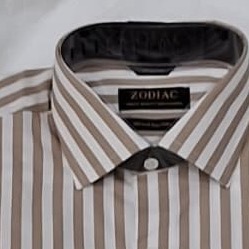
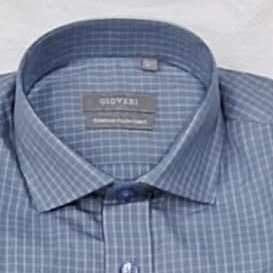
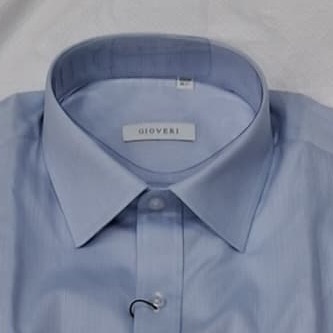
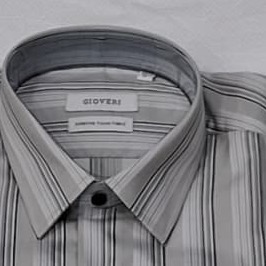
The collar frames the face; the cuff finishes the hand. Together they are the most visible parts of a shirt beneath a jacket, and they set its level of formality more than any other detail.
PointSemi-spreadSpreadWide spreadButton-down
Part One
Collar styles
Collars are described mainly by the angle between their points — the “spread” — and by the length of the points. A wider spread makes room for a larger tie knot; longer points lengthen the face.
Point Collar
Narrow spread · long points
The traditional business collar, with points that angle steeply downward. It visually lengthens the face and neck and suits slimmer tie knots such as the four-in-hand.
Best for: round or wide faces, classic suits, narrow ties.
Semi-Spread
Moderate spread
The most versatile collar. It sits between point and spread, looks balanced with or without a tie, and suits most face shapes and occasions.
Best for: everyday office wear; a first choice if you own only a few shirts.
Spread Collar
Wide spread
Points angled further apart reveal more of the tie and frame a fuller knot. It reads confident and slightly more formal, and broadens a narrow face.
Best for: suits, larger knots, oval or long faces.
Cutaway Collar
Very wide spread
The points sweep back almost horizontally. A fashion-forward, European-leaning choice that demands a substantial tie knot, or a neat open-collar look without a tie.
Best for: sharp tailoring, long or slim faces.
Button-Down Collar
Points fastened to the shirt
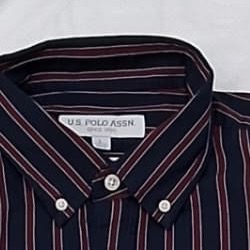
Small buttons hold the points in place. Brooks Brothers introduced it to American shirts at the end of the nineteenth century, inspired by the collars of English polo players. Relaxed and practical — at its best without a tie, or with a knitted one.
Best for: business casual, oxford cloth, blazers.
Classic & Band Collars
Formal and minimal extremes
“Classic formal collar” usually means a structured point or semi-spread collar with stiffened points. At the other extreme, the band (mandarin) collar omits the points altogether — modern and clean, but best kept for smart-casual and festive wear.
Best for: classic: formal business; band: relaxed elegance.
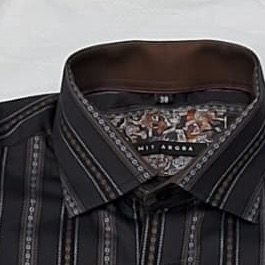
Contrast inner collar band
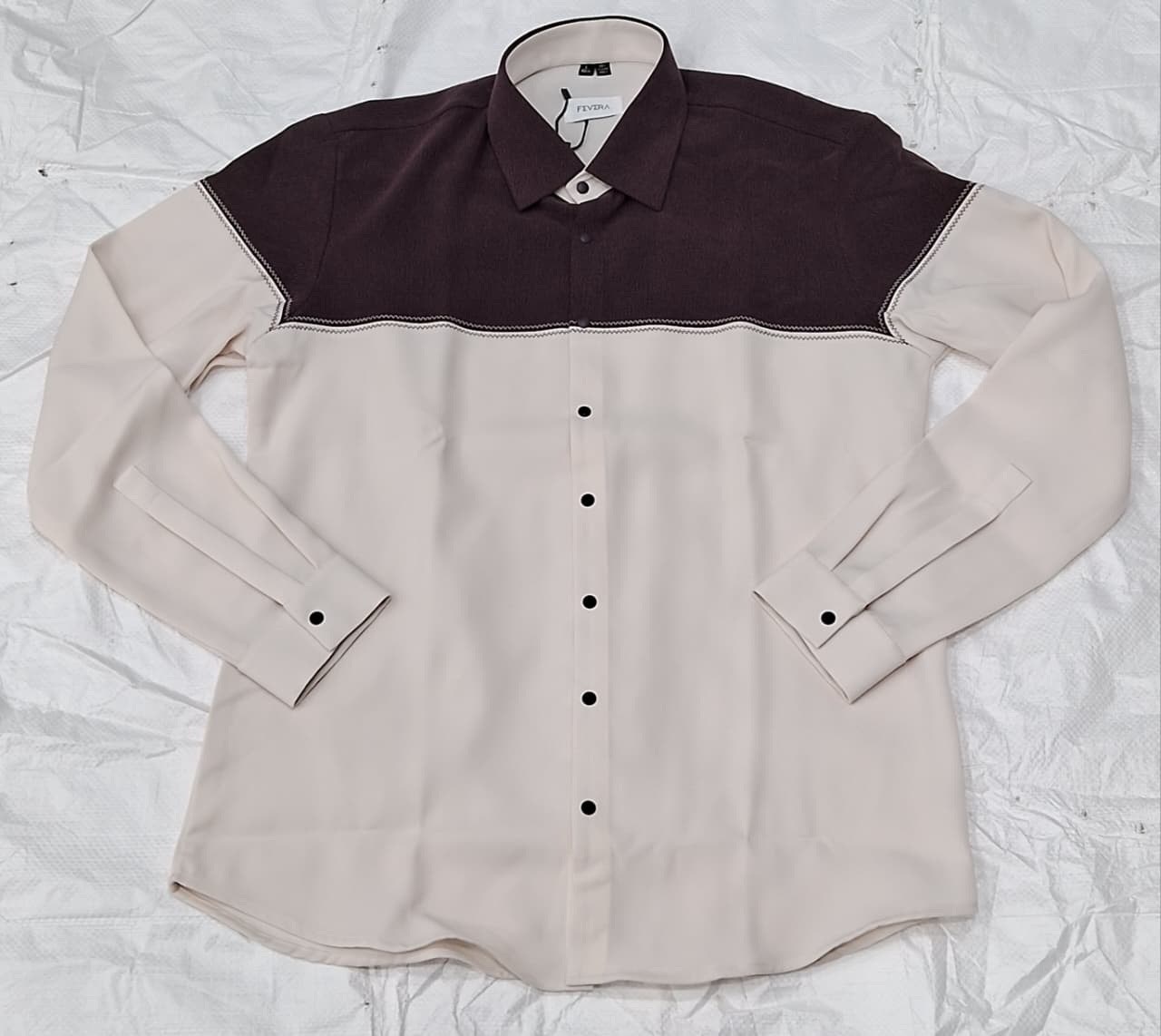
Contrast yoke and collar
Choosing a Collar
Match the collar to the face, tie & jacket
A good rule is balance through contrast: a long, narrow face is softened by a wider spread; a round or broad face is lengthened by a point collar. Collar points should also be long enough to stay tucked beneath the jacket lapels.
Consider the tie, too. A slim four-in-hand knot looks lost in a cutaway; a large Windsor knot crowds a narrow point collar. And if you often go without a tie, choose a collar with enough structure — or buttons — to stand up neatly rather than collapse under the jacket.
Contrast details, such as a patterned inner band or a contrasting yoke, are subtle signatures that appear only when the collar is open or the shirt is seen up close. They suit relaxed and creative settings best.
Part Two
Cuff styles
Cuffs divide into two families. Barrel (button) cuffs fasten with buttons and are the everyday norm. Double cuffs fold back on themselves and fasten with cufflinks; they are the more formal option.
Single Cuff
Single-button barrel
A single layer of cuff with one button — the most common style on business shirts. Clean, practical, and equally at home with or without a jacket. Many have two buttonholes or buttons to adjust the wrist size.
Button Cuff
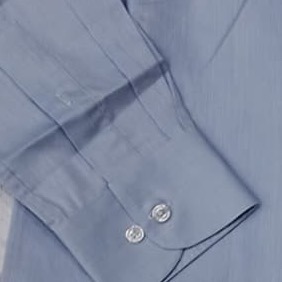
Two-button barrel
A deeper cuff with two buttons side by side, giving a slightly dressier, more substantial look. Often found on shirts intended for suits.
Rounded Cuff
Softened corners
The corners are curved. It is the most common corner shape, comfortable against the wrist and slightly softer in appearance than square corners.
Angled Cuff
Mitred corners
The corners are cut on a diagonal, giving a sharper, architectural finish that pairs well with modern tailoring and spread or cutaway collars.
Double Cuff
Folded back, for cufflinks
A cuff twice the normal length, folded back on itself and fastened with cufflinks. The most formal cuff, and the conventional choice for black-tie and ceremonial dress.
French Cuff
The double cuff, by another name
“French cuff” is the term widely used in America for the double cuff. Both fold back and require cufflinks; the ends are pinched together so the cuff faces outward like a kissing pair.
Seen Close
Cuffs in practice
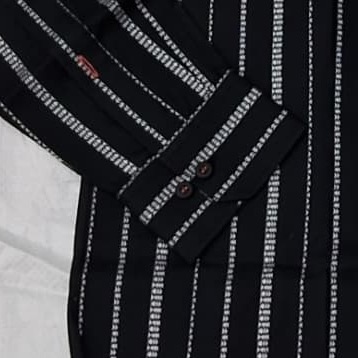
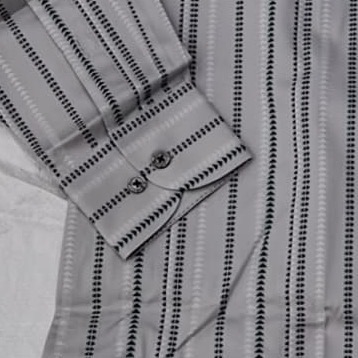
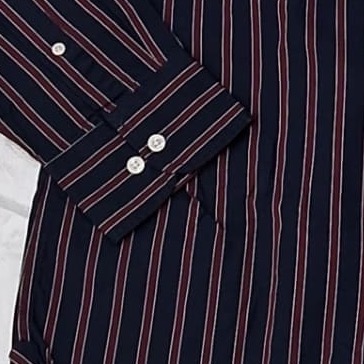
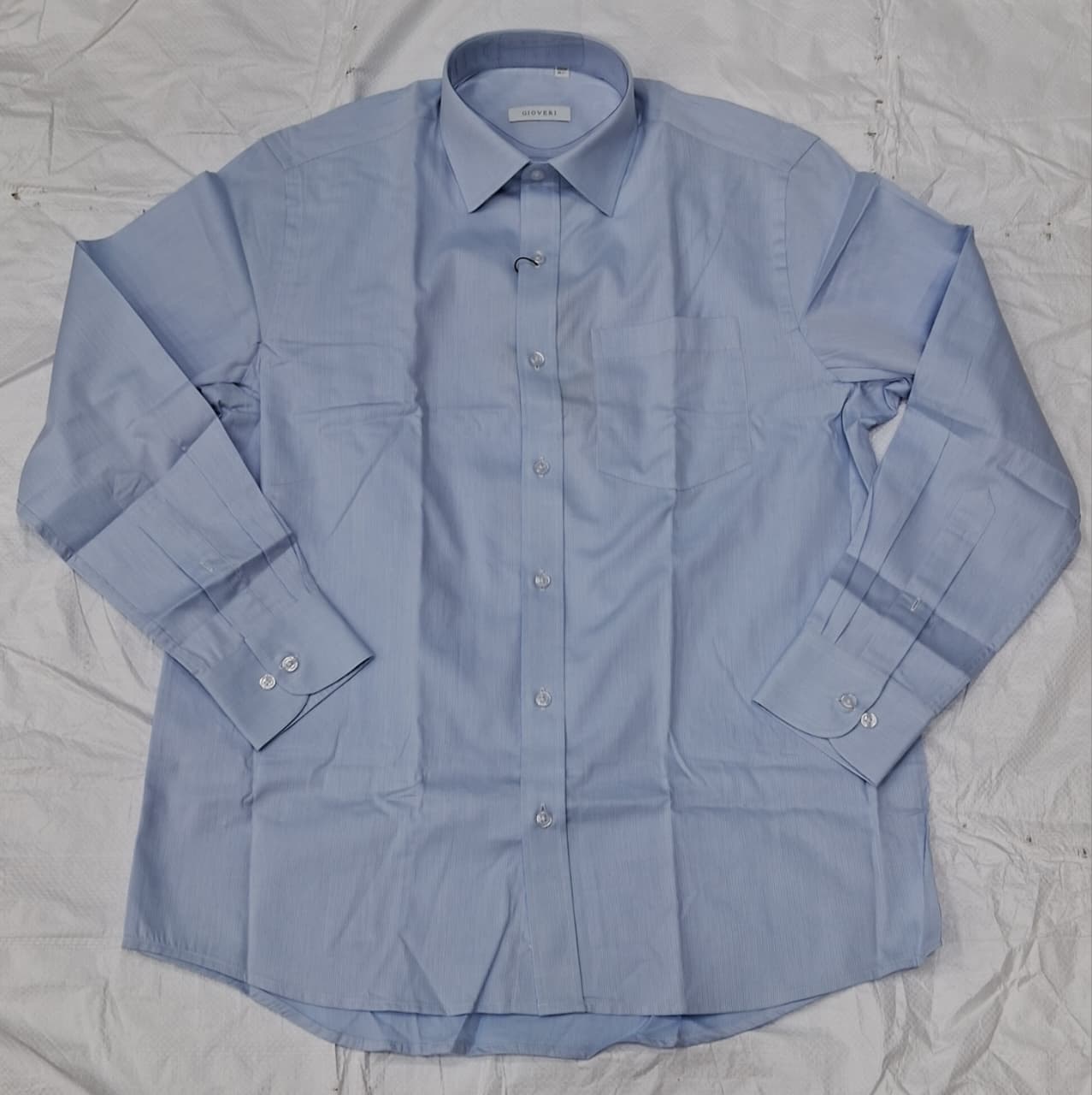
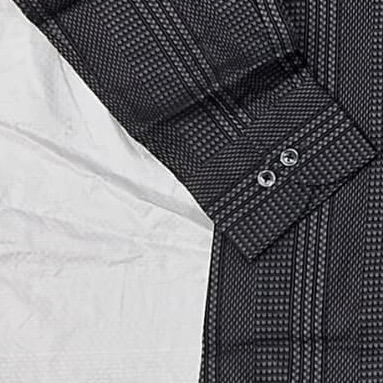
Four barrel cuffs from Options Mall photographs. Notice the corner shapes, the button pairs that allow adjustment, and how pattern runs through the cuff band.
Rounded, two buttons — light blueSquare-cornered — black stripeTwo-button — grey patternTwo-button — navy stripe
How collar and cuff work together
Collar and cuff should speak the same language. A spread collar and angled cuff feel modern and precise; a point collar with a rounded barrel cuff feels traditional; a button-down collar with a simple single cuff is relaxed. Double cuffs belong with the most formal collars — spread, semi-spread or cutaway — and never with a button-down.
Under a jacket, a well-fitted cuff shows by about a centimetre. That small band of shirt is one of the clearest signs of a considered outfit.
The complete shirtCharcoal dobby cuff
Part Three
Shirt construction details
What to look for when you examine a shirt closely. None of these require a label to judge — only your eyes and hands.
Button placement
Buttons should be spaced so the shirt does not gape at the chest when seated. Many good shirts place a button near the natural waist where the shirt is most stressed.
Placket design
A standard front placket is a folded, stitched strip that gives a defined centre line. A French (plain) front has no visible strip and looks cleaner. A concealed (fly-front) placket hides the buttons entirely for a minimal look.
Collar stiffness
Formal collars are firmer and hold their shape under a tie; softer collars roll naturally and suit casual wear. Removable collar stays keep points straight.
Interfacing
The hidden layer inside collar and cuffs. It may be fused (bonded with heat) for a crisp, consistent shape, or sewn for a softer, more natural roll.
Cuff structure
A well-made cuff is evenly shaped, with interfacing that keeps it from collapsing and a button positioned so the cuff sits snugly at the wrist.
Stitching
Look for small, even, straight stitches along the collar and cuff edges and flat side seams without puckering. Higher stitch density generally indicates more careful construction.
Button finishing
Buttons should be firmly attached and sit flat. Mother-of-pearl buttons have a natural depth and lustre; most shirts use durable resin or plastic buttons that imitate it.
Pattern matching
On striped and checked shirts, careful makers align the pattern across pocket, placket, collar and yoke — a sign of time taken in cutting.