The Collection

Men's Formal Shirts

Seven families of formal shirt, what each says, and where each belongs — from the white shirt that suits every dress code to contemporary pieces that reinterpret the classics.

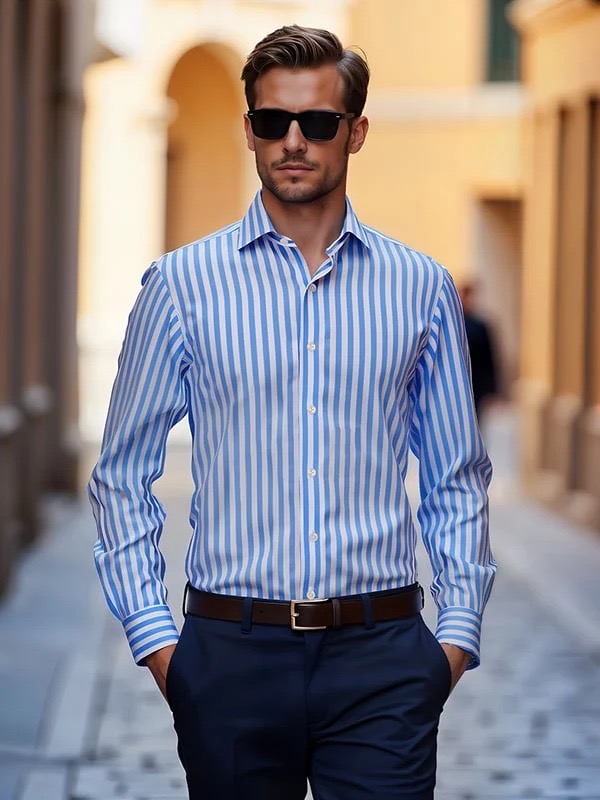
A man in a light blue and white striped formal shirt, tucked into navy trousers with a dark leather belt, walking along a sunlit street
01

Classic white formal shirts

If a professional wardrobe has a single foundation, it is the white shirt.

White became the emblem of professional dress in the nineteenth and early twentieth centuries, when a spotless white collar was a visible sign that its wearer worked at a desk rather than in a mill or on a farm — hence the term “white-collar”. Keeping a shirt white required frequent laundering, and so a clean white shirt also signalled care and means.

Today its appeal is practical. White goes with every suit colour, every tie and every trouser. It reflects light onto the face, reads as crisp in photographs and video calls, and is the expected choice for the most formal occasions. In a smooth poplin it looks sharpest; in a twill or a subtle dobby, as in the shirt shown here, it gains a little texture and warmth.

Choosing a white shirt

  • Check opacity: lighter weaves can be slightly sheer; a twill or royal oxford is usually more opaque.
  • Pick a collar that suits your tie habits — semi-spread is the most adaptable.
  • Own more than one if you can; whites need rotation and regular washing to stay bright.
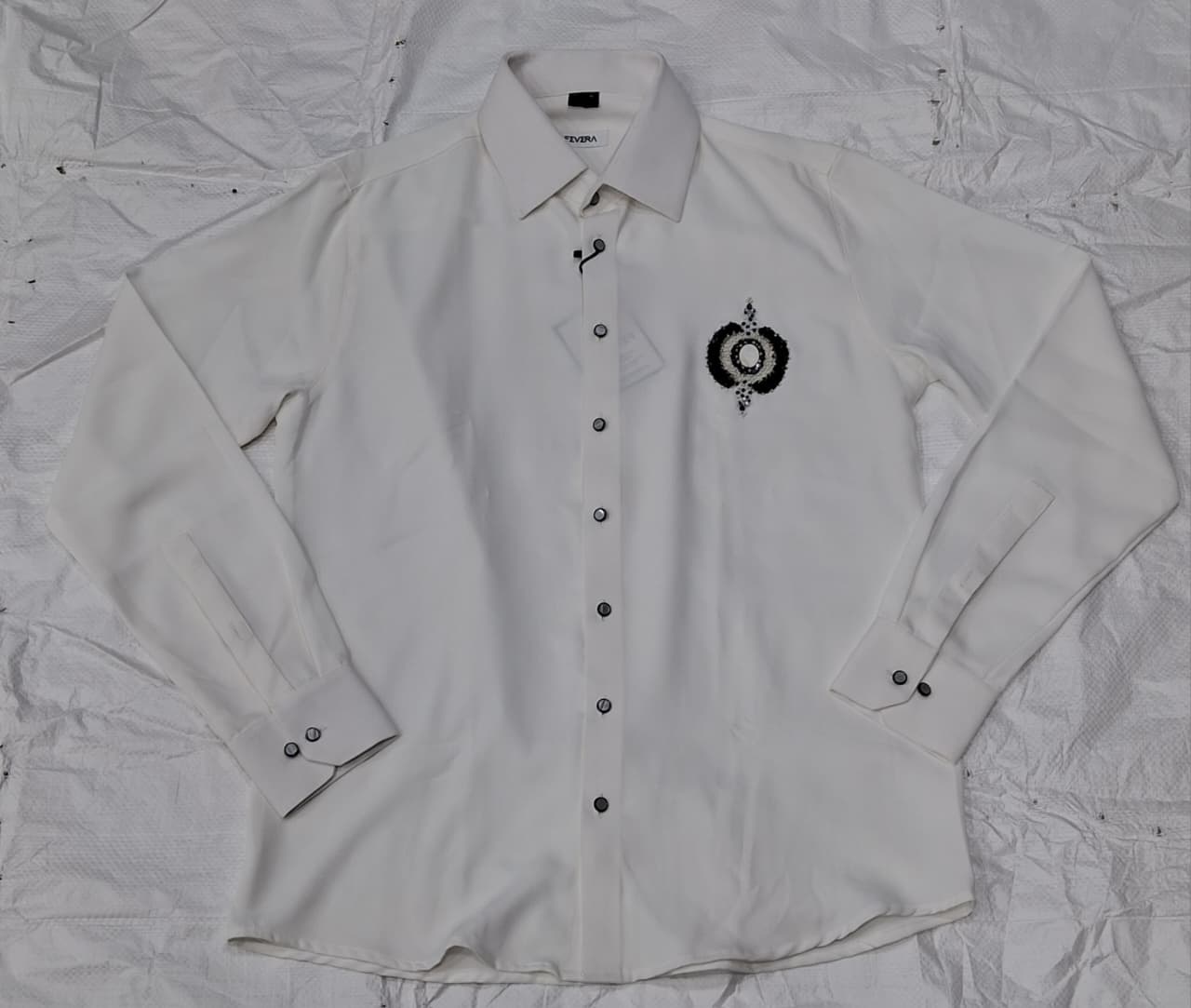
White formal shirt with a small embroidered crest on the chest
Pl. 1White shirt with a discreet chest emblem
02

Light blue formal shirts

Light blue is arguably the most worn business shirt colour in the world, and for good reason.

It is softer than white, flattering to most complexions, and slightly less formal, which makes it ideal for everyday office wear. It also hides minor marks better than white and photographs well. Unlike stronger colours, a pale blue never looks out of place in a conservative office.

Light blue works with nearly every trouser colour. With navy it creates a tonal, polished look; with charcoal or mid-grey it is classic business; with beige or stone chinos it becomes relaxed and summery. Under a navy suit, it is a safe and elegant choice for interviews and presentations.

Best weavesPoplin, twill, end-on-end, oxford
TrousersNavy, charcoal, grey, beige
TiesNavy, burgundy, deep green
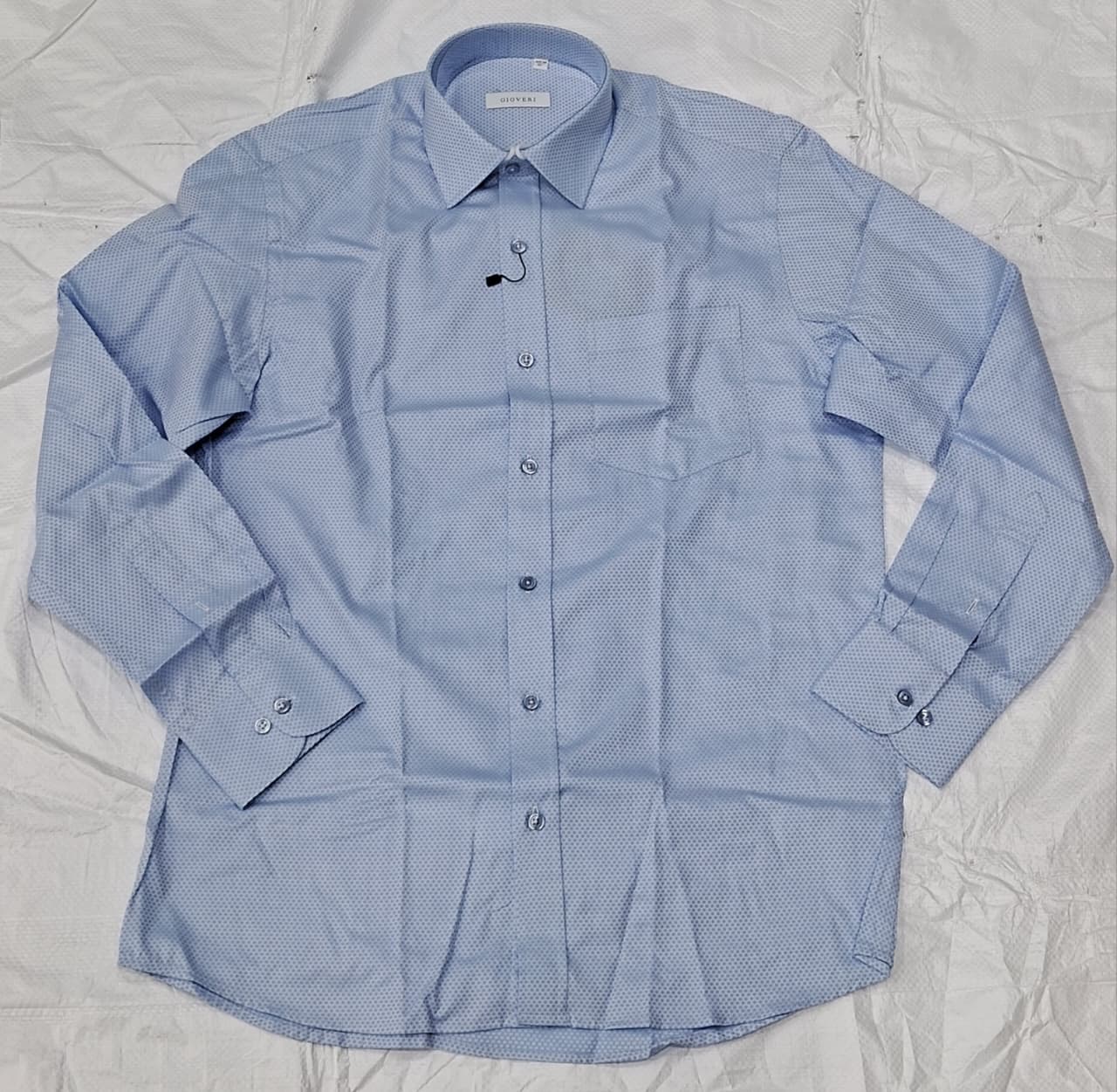
Light blue textured formal shirt laid flat
Pl. 2Light blue, fine texture
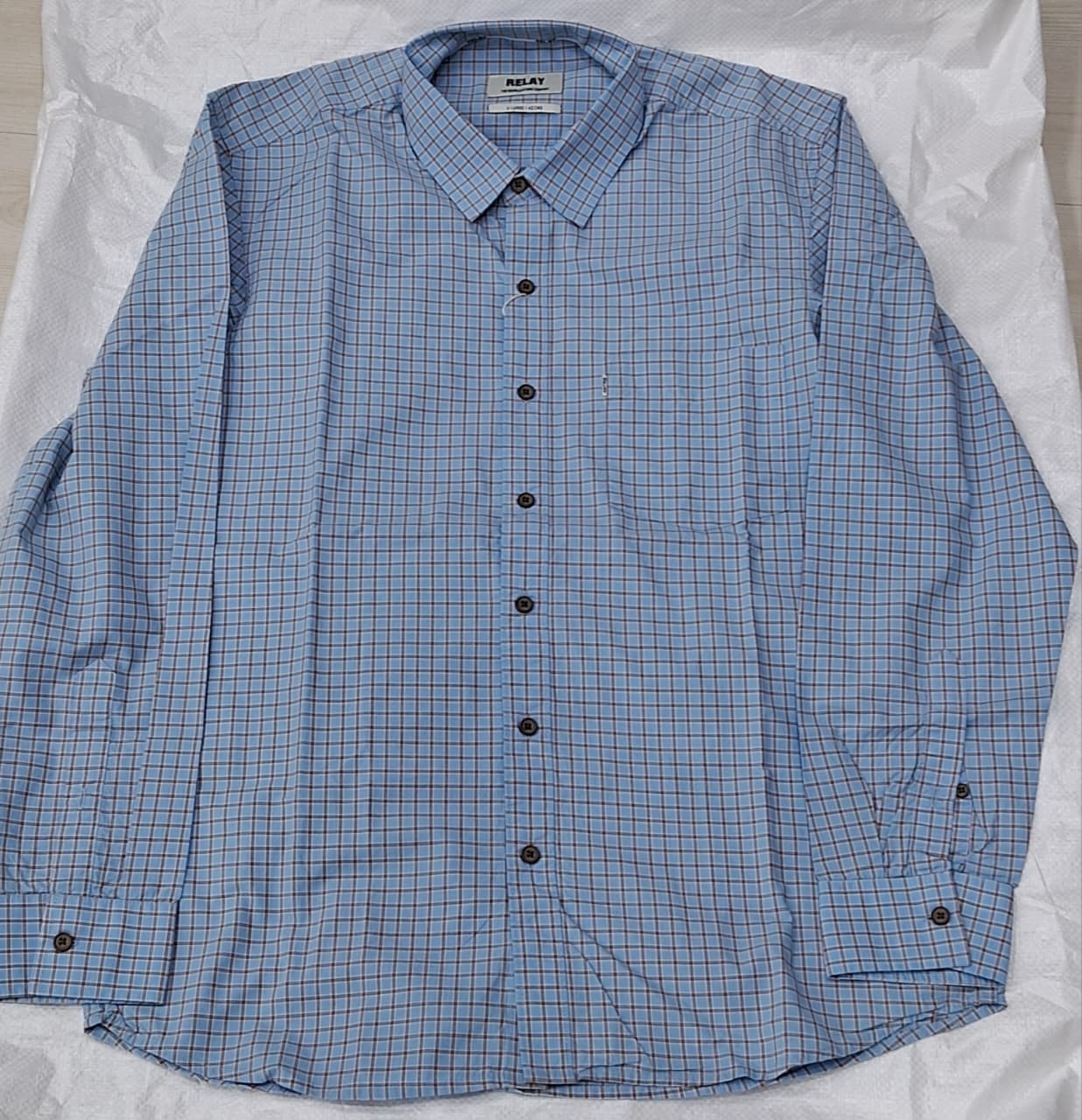
Light blue shirt with a small check
Pl. 3Light blue micro check
03

Solid formal shirts

Beyond white and blue, solid colours offer a quiet way to add depth without pattern.

Understated solids — sage, teal, charcoal, navy, burgundy — sit comfortably in contemporary and creative workplaces and come into their own at evening events. Because there is no pattern to read, the colour itself carries the outfit, so it pays to choose shades that are muted rather than saturated.

As a general guide, the darker and stronger the shirt, the less formal it reads in a traditional business setting. A charcoal or navy shirt with a dark suit looks modern and sleek, but for very formal occasions a lighter shirt under the jacket remains the convention. Pair muted greens and teals with navy, grey or beige; pair charcoal with lighter grey or black trousers.

Colour selection

  • Keep contrast in mind: a dark shirt with dark trousers needs a lighter element, such as a belt or jacket, to avoid looking flat.
  • Muted, slightly greyed colours look more refined than bright ones.
  • Test the colour near your face in daylight; some shades suit warmer complexions, others cooler ones.
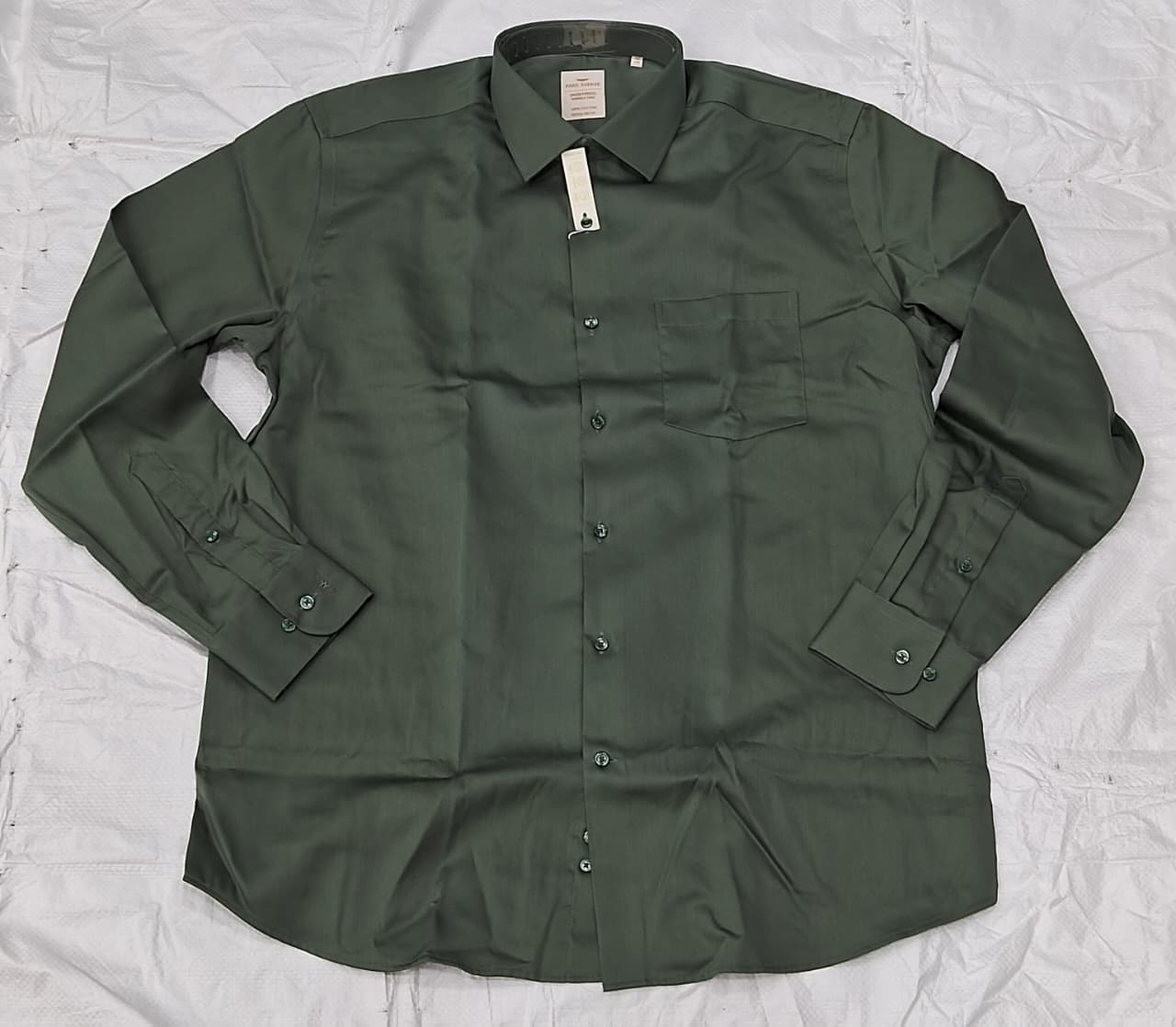
Sage green solid shirt
Pl. 4Sage
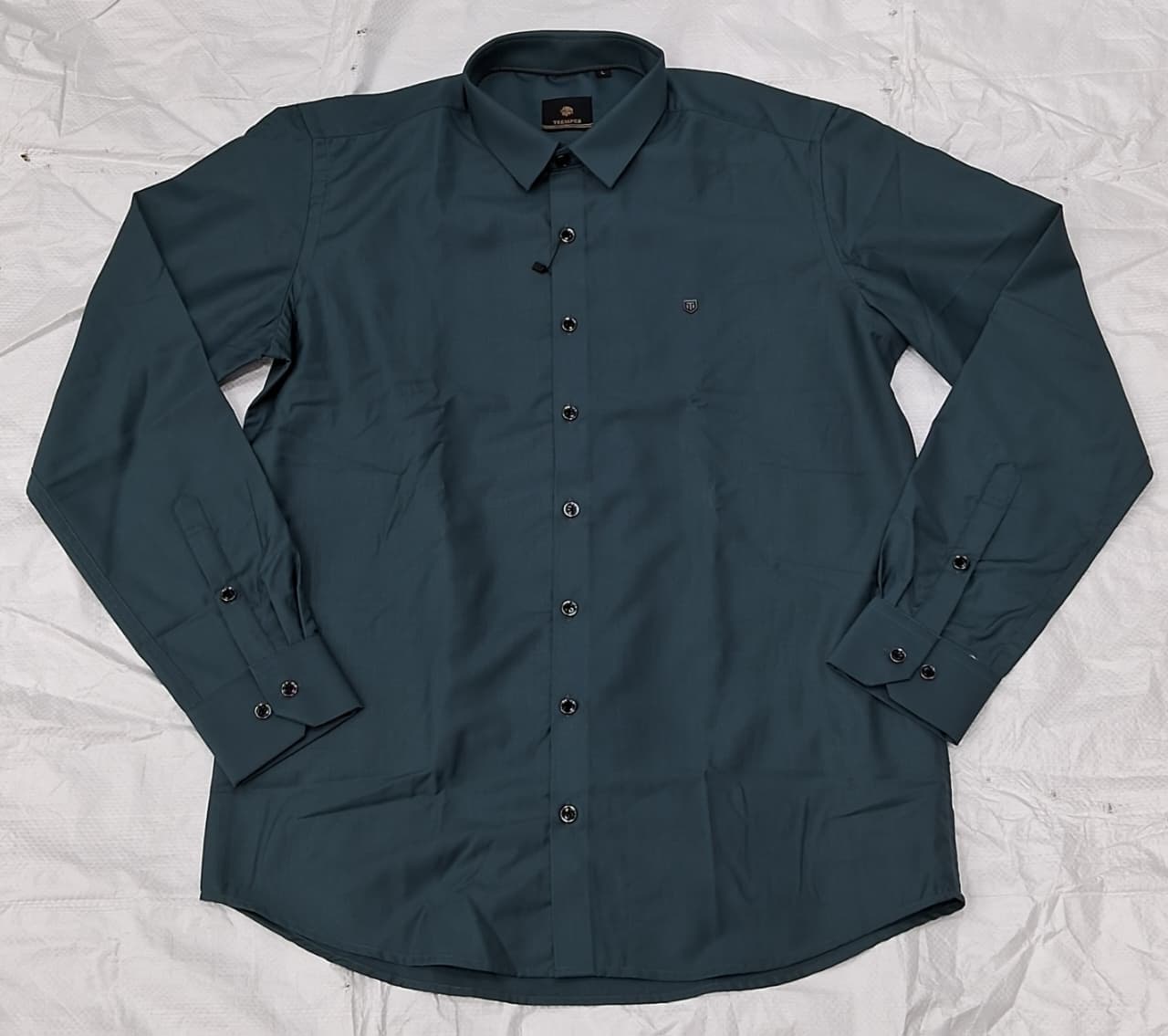
Deep teal solid shirt
Pl. 5Deep teal
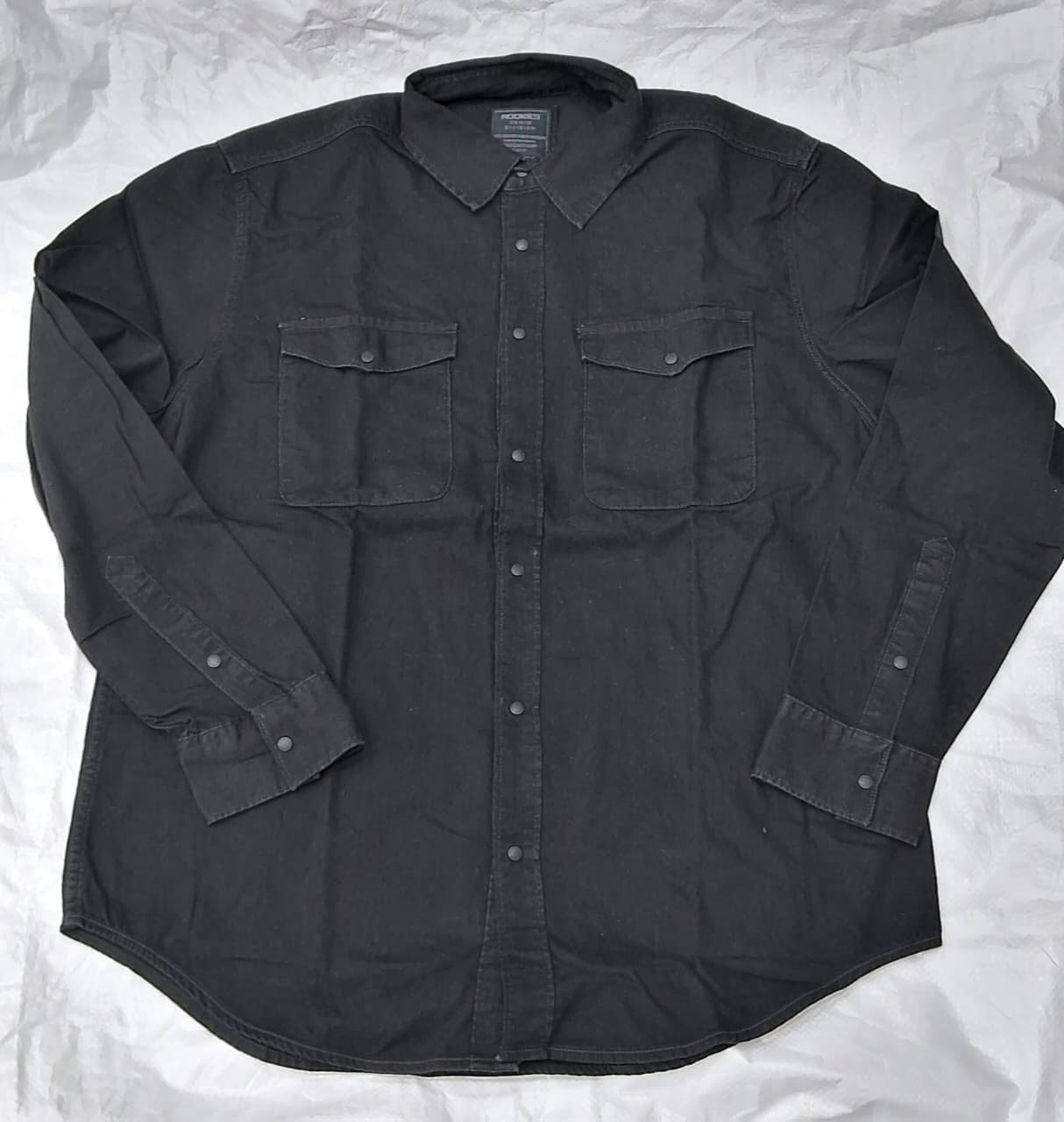
Charcoal shirt with twin chest pockets
Pl. 6Charcoal, utility pockets
04

Striped formal shirts

Stripes are the most businesslike of patterns — orderly, linear and easy to wear.

Formal shirts almost always use vertical stripes. Running from collar to hem, they draw the eye up and down, which tends to make the wearer look taller and slimmer. Horizontal stripes do the opposite and belong to casual and nautical clothing rather than office wear.

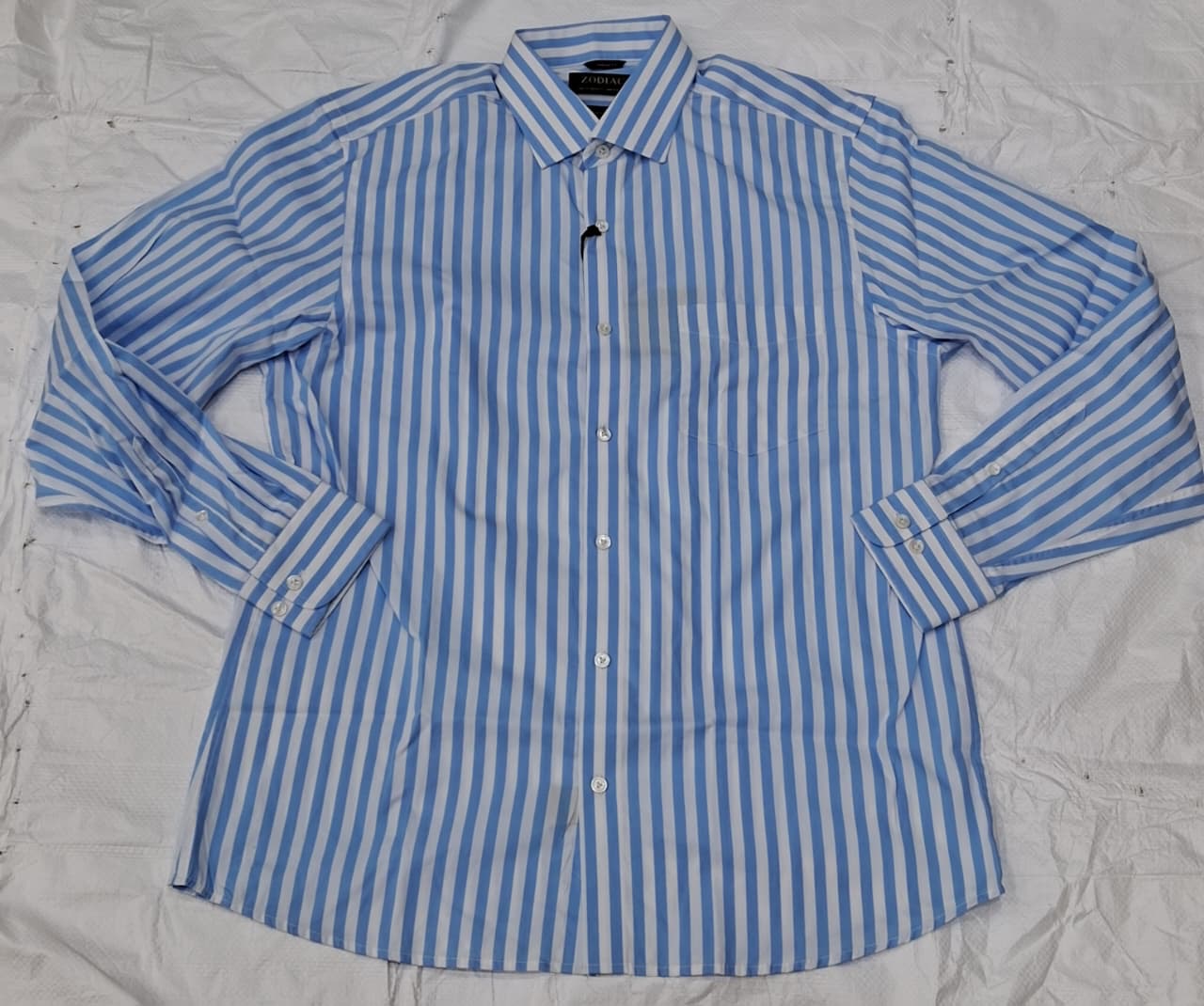
Stripes vary by width and spacing. A pinstripe or hairline stripe is fine enough to read almost as a solid from across a room. A pencil stripe is a little bolder. A Bengal stripe — named after the region of Bengal, where striped cotton cloths were historically produced — has stripes and spaces of equal width and makes a confident statement. Multi-stripes, or candy stripes, are the most expressive.

Styling considerations

  • The bolder the stripe, the plainer the tie and jacket should be.
  • When combining patterns, vary the scale: a fine stripe shirt with a wider-striped or solid tie.
  • Black and dark stripes on white look sharp and modern; blue on white is the classic office choice.
Blue and white Bengal stripe shirt
Pl. 7Blue Bengal stripe
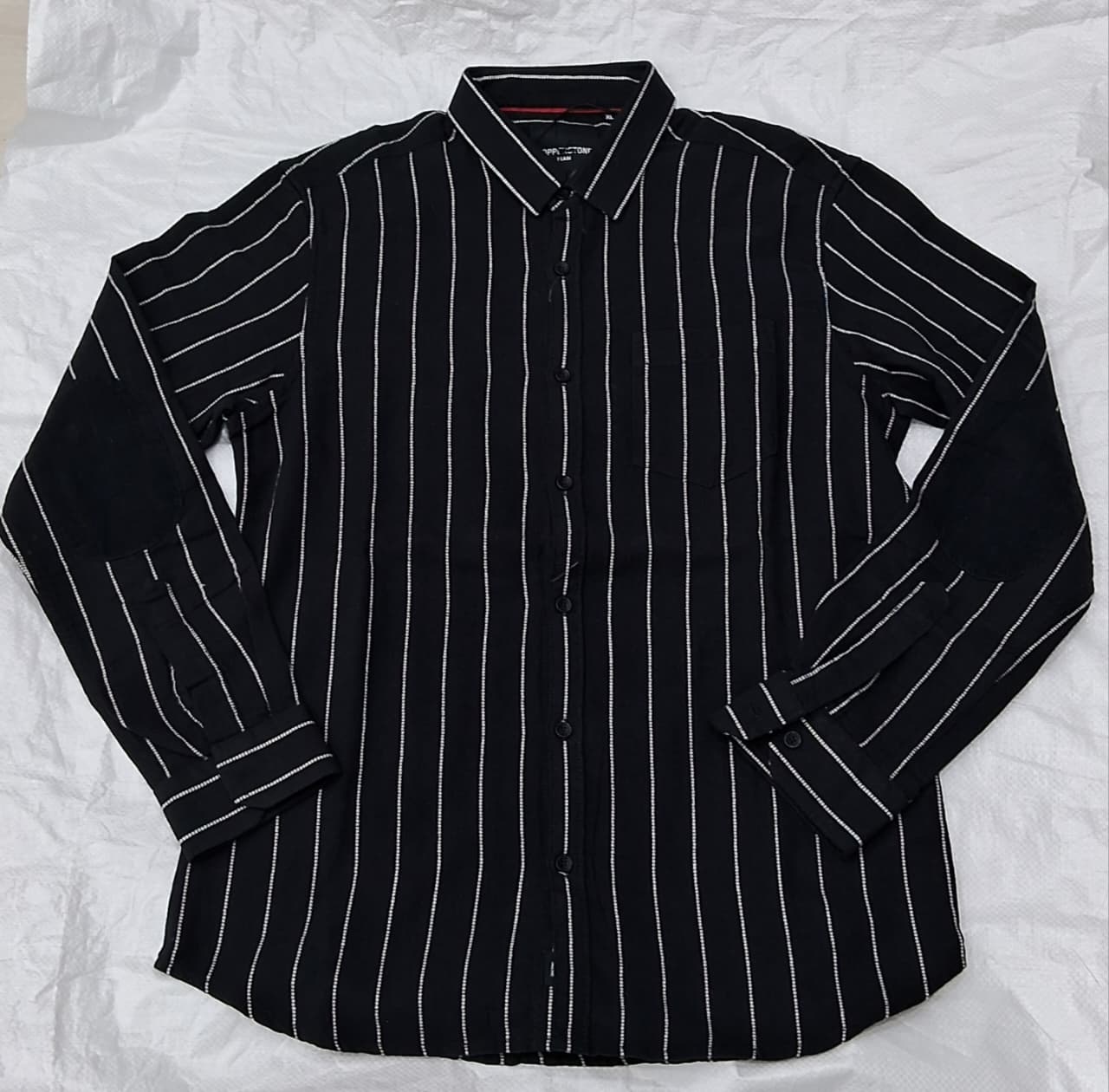
Black shirt with white pinstripes
Pl. 8Black with white pinstripe
05

Checked formal shirts

Checks soften a business look and suit the many days that are professional without being ceremonial.

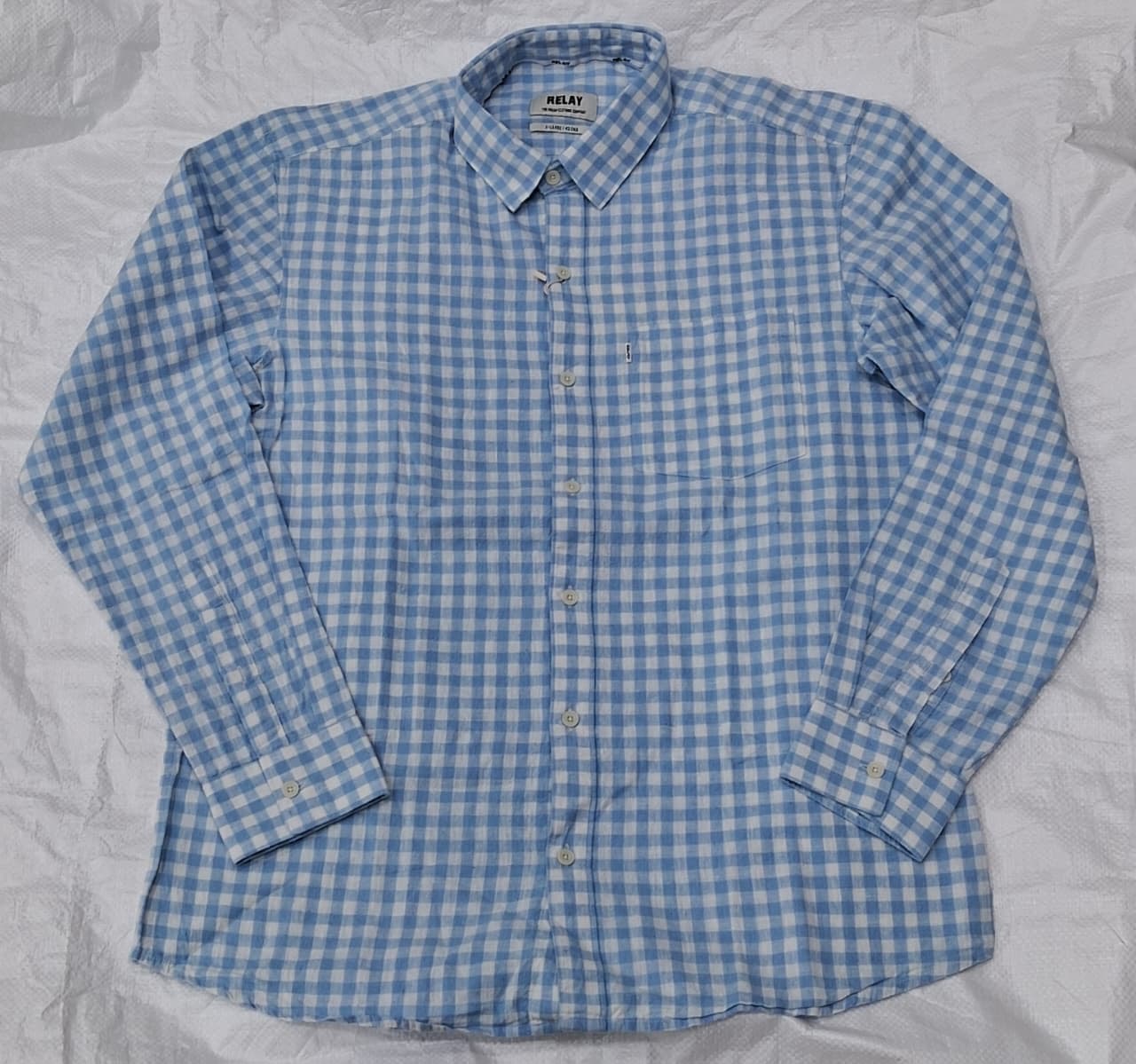
Gingham — an even check of a single colour on white — is the most versatile; small-scale gingham in blue is at home in most offices. Graph or windowpane checks use fine lines on a plain ground and read lighter and more open. Tattersall checks, with two alternating colours of line, have country origins and a warm, traditional character. Tartan and larger plaids are the most casual and best kept for relaxed Fridays or travel.

The rule of thumb: the smaller and more muted the check, the more formal the shirt. Checked shirts usually look best without a tie or with a plain knitted or solid silk tie, and pair well with plain trousers and solid jackets.

Most formalFine gingham, micro check
Middle groundGraph, windowpane
Most casualTartan, large plaid
Sky blue and white gingham shirt
Pl. 9Sky gingham
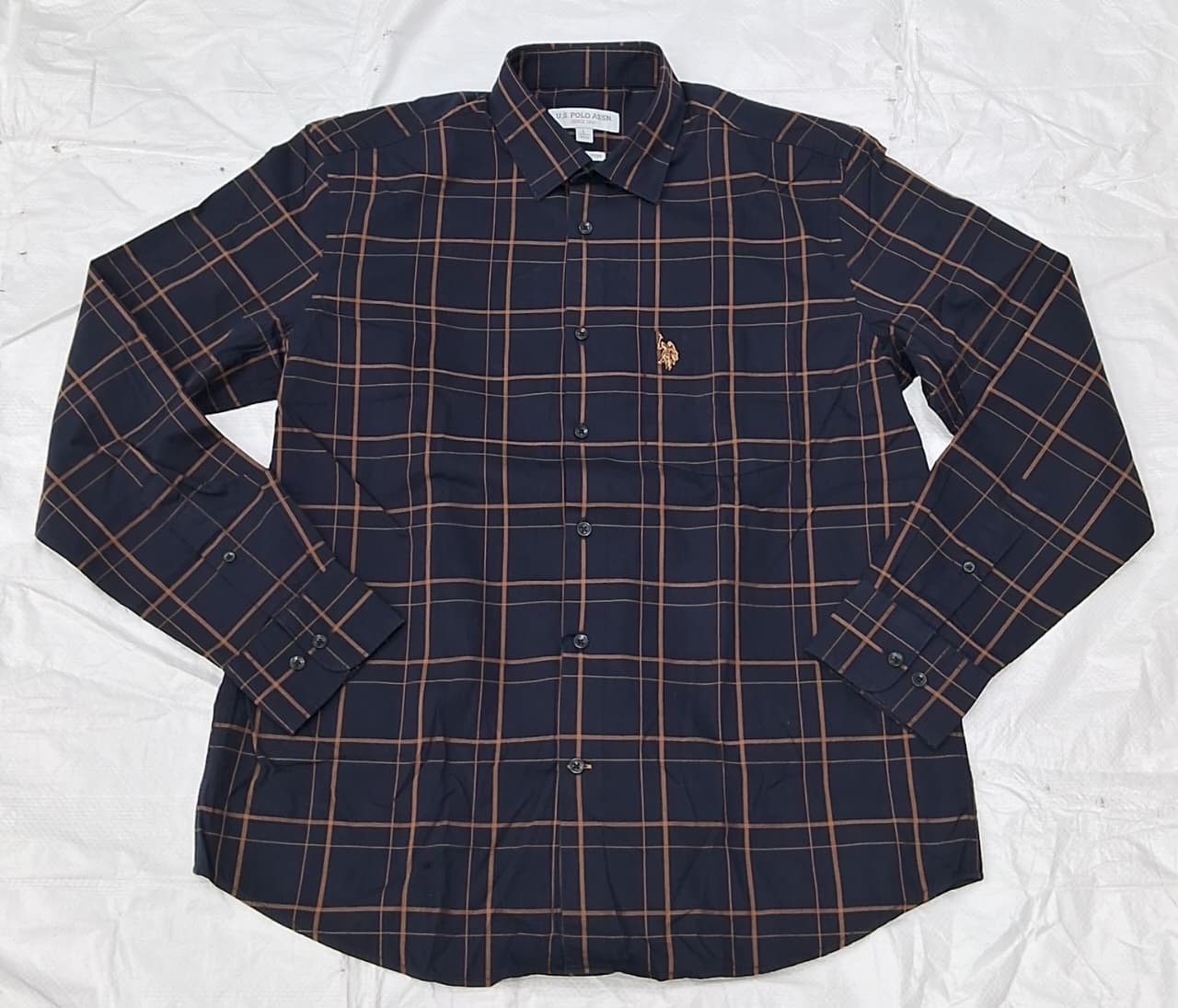
Navy shirt with a fine windowpane check
Pl. 10Navy windowpane
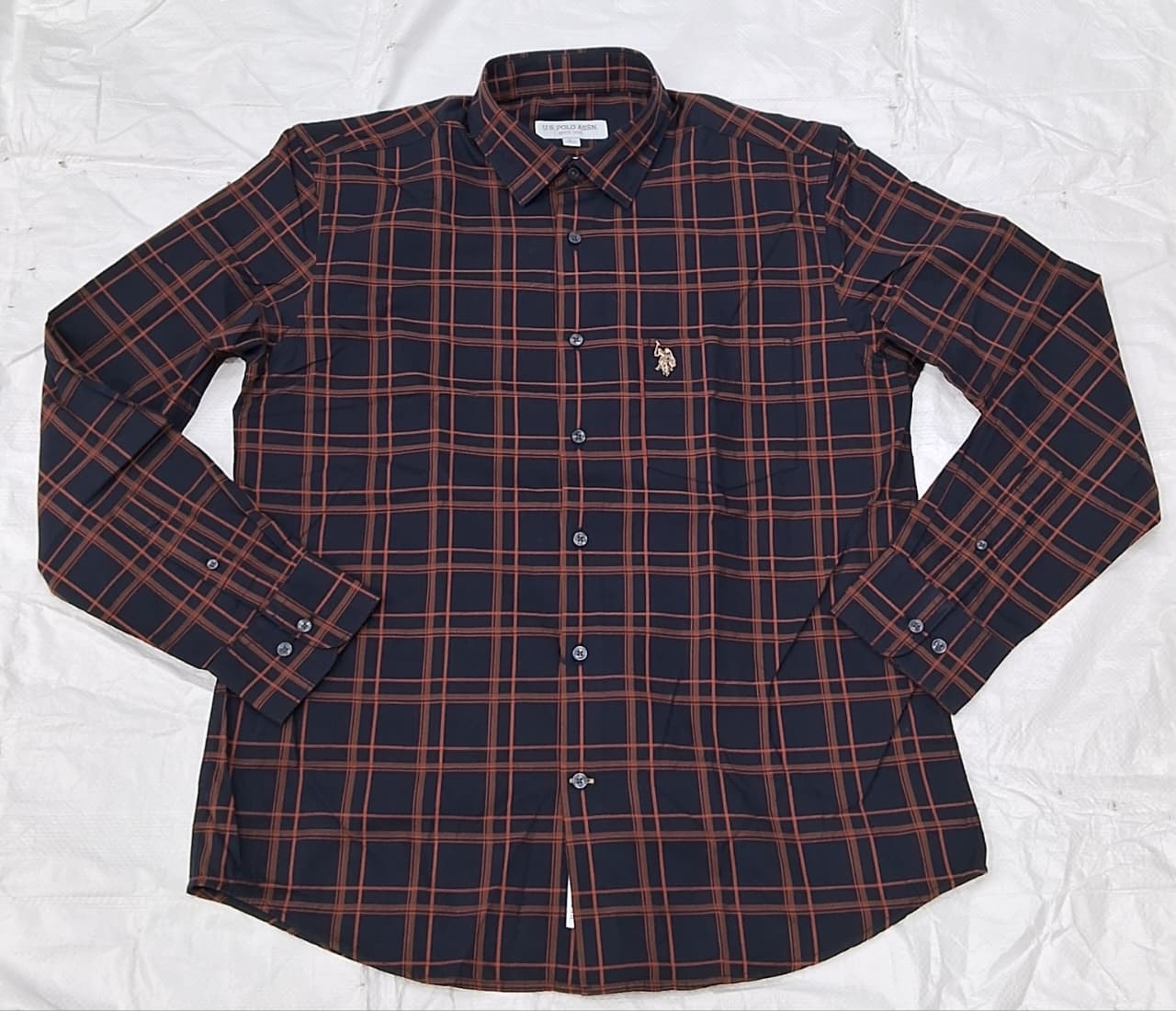
Navy shirt with a red and white tartan check
Pl. 11Navy tartan — relaxed days
06

Contemporary formal shirts

Contemporary shirts keep the structure of the office shirt but change one or two details.

The changes may be a contrast collar or inner collar band, piping along seams, a concealed placket, a darker palette or a slimmer cut. Done well, these shirts feel modern without losing their professional character. They suit creative industries, evening events and anyone who wants their shirt to carry a little more personality.

The key is restraint: choose one distinctive element and keep everything else simple. A black shirt with fine white piping, for example, looks best with plain charcoal or black trousers and no tie. A contrast-collar shirt works well open-necked under a soft jacket.

Because contemporary shirts are more noticeable, they are generally less suitable for conservative settings such as formal interviews or court appearances, where a classic white or blue shirt is the safer choice.

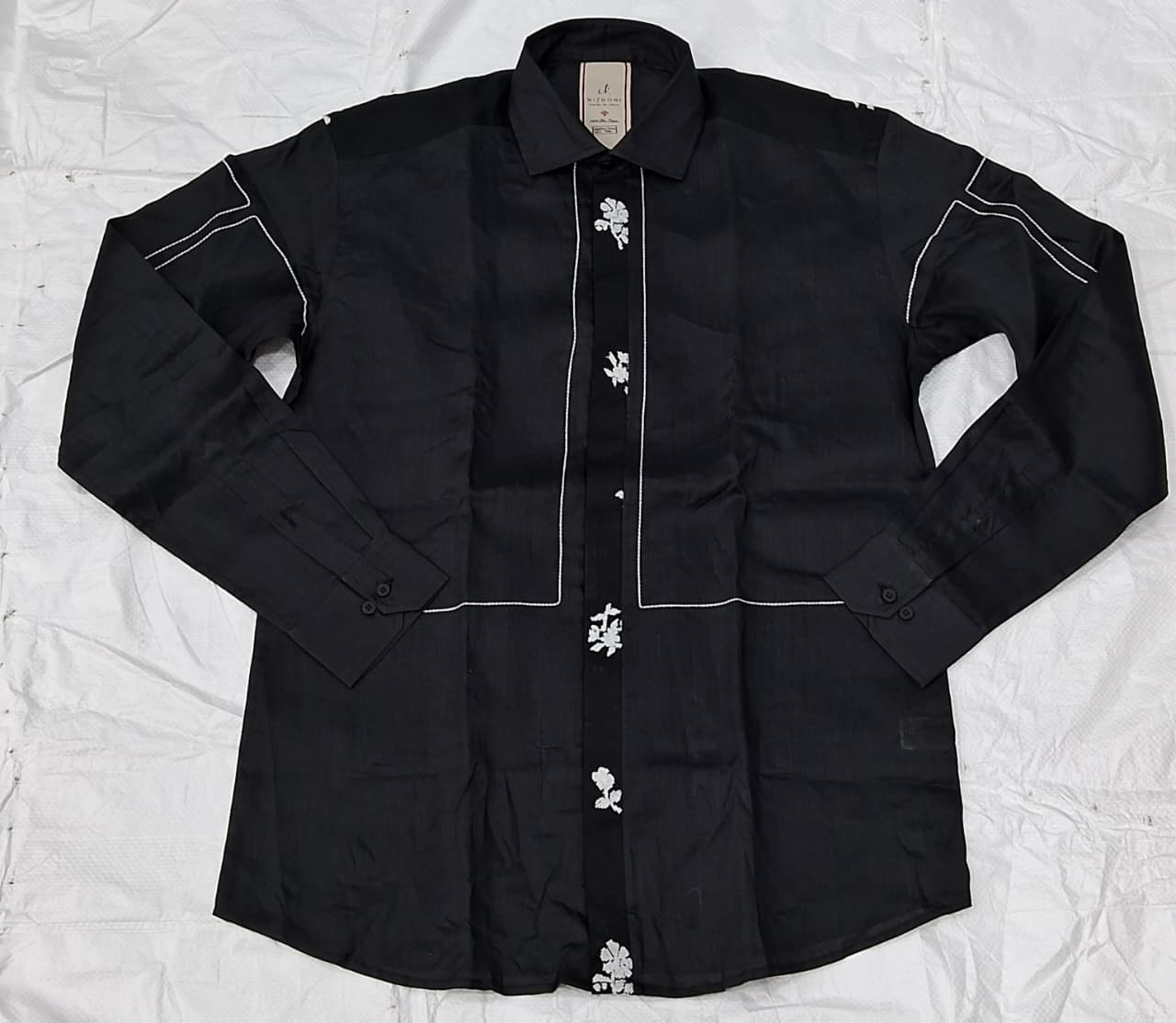
Black shirt with white contrast piping and small embroidered details
Pl. 12Black with contrast piping
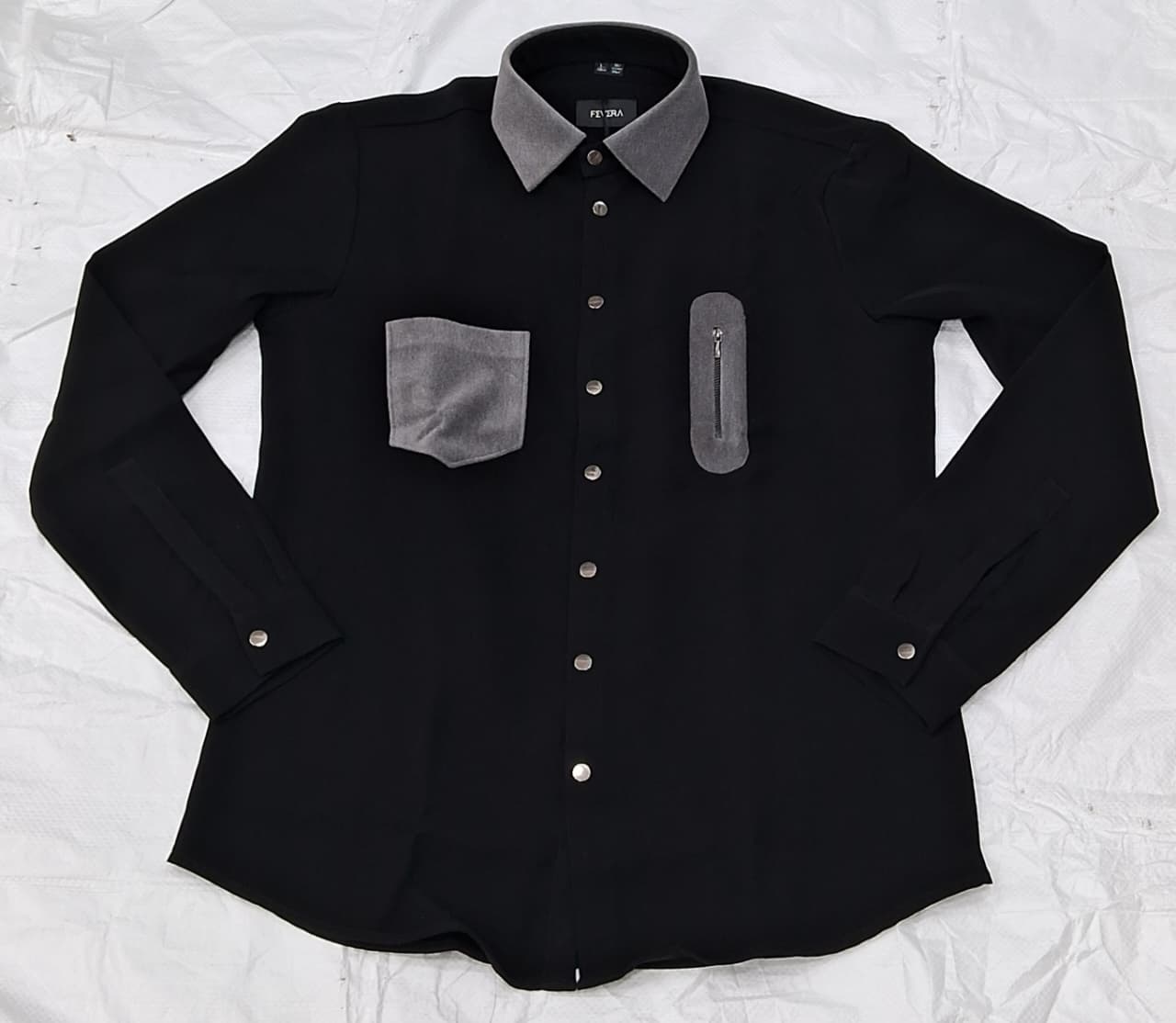
Black shirt with a grey contrast collar and pocket
Pl. 13Grey contrast collar
07

Formal shirt styling

A shirt rarely works alone. These combinations cover most professional situations.

Shirt combinations at a glance
ShirtTrousersSuit or jacketAccessories
WhiteNavy, charcoal, black, greyAny suit; navy blazerAny tie; black or brown shoes
Light blueNavy, grey, beige, stoneNavy, grey or brown suitsNavy or burgundy tie; brown shoes
Fine stripeSolid navy or greySolid suitsSolid or small-pattern tie
Small checkPlain grey, navy, beigeSolid blazer, unstructured jacketKnitted tie or open collar
Dark solidLighter grey, beige, blackDark suit for eveningNo tie or a tonal tie; black shoes
ContemporaryPlain, dark trousersSoft jacket or noneMinimal; let the detail lead

Three rules worth remembering

  • The shirt should be lighter than the suit or jacket in most business settings.
  • Only one element should be bold — shirt, tie or jacket — not all three.
  • Match leathers: belt and shoes in the same colour family.