Styling

Office Shirt Styling

A shirt becomes an outfit through the choices around it: trousers, jacket, belt, shoes and the occasional tie. This chapter sets out how to make those choices with confidence for every kind of working day.

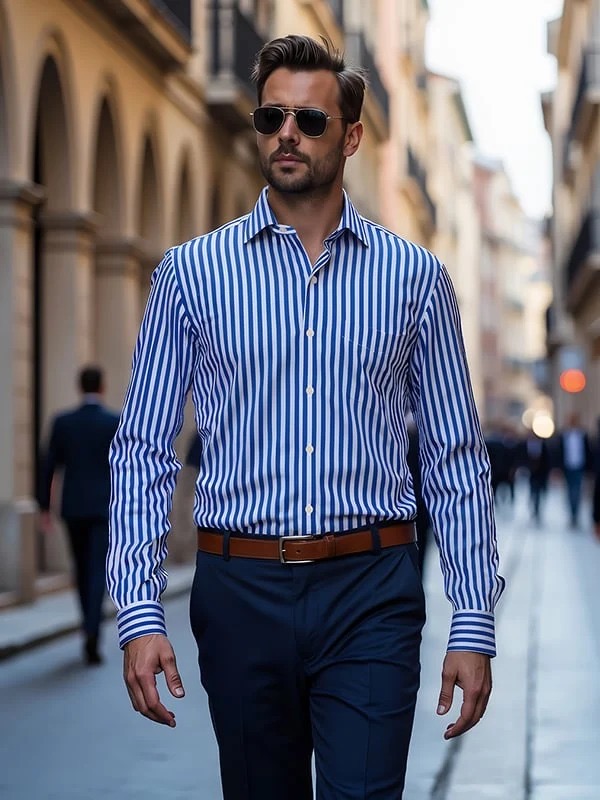
A man in a blue and white Bengal-striped shirt, navy trousers and a tan belt, walking on a city street

Four Looks

Dressing for the working week

Each look starts with the shirt and builds outwards. Use them as templates and substitute shirts from your own wardrobe.

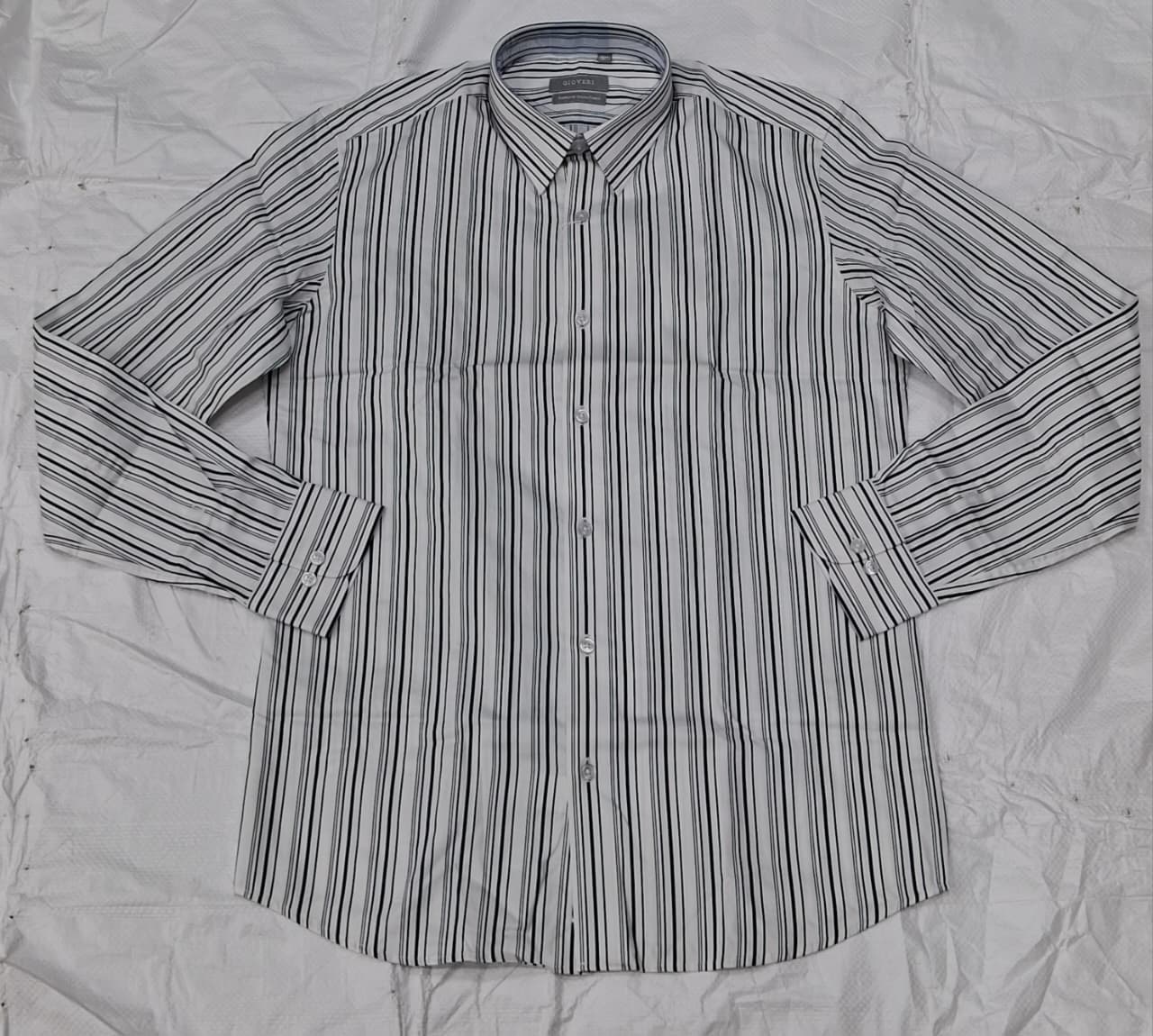
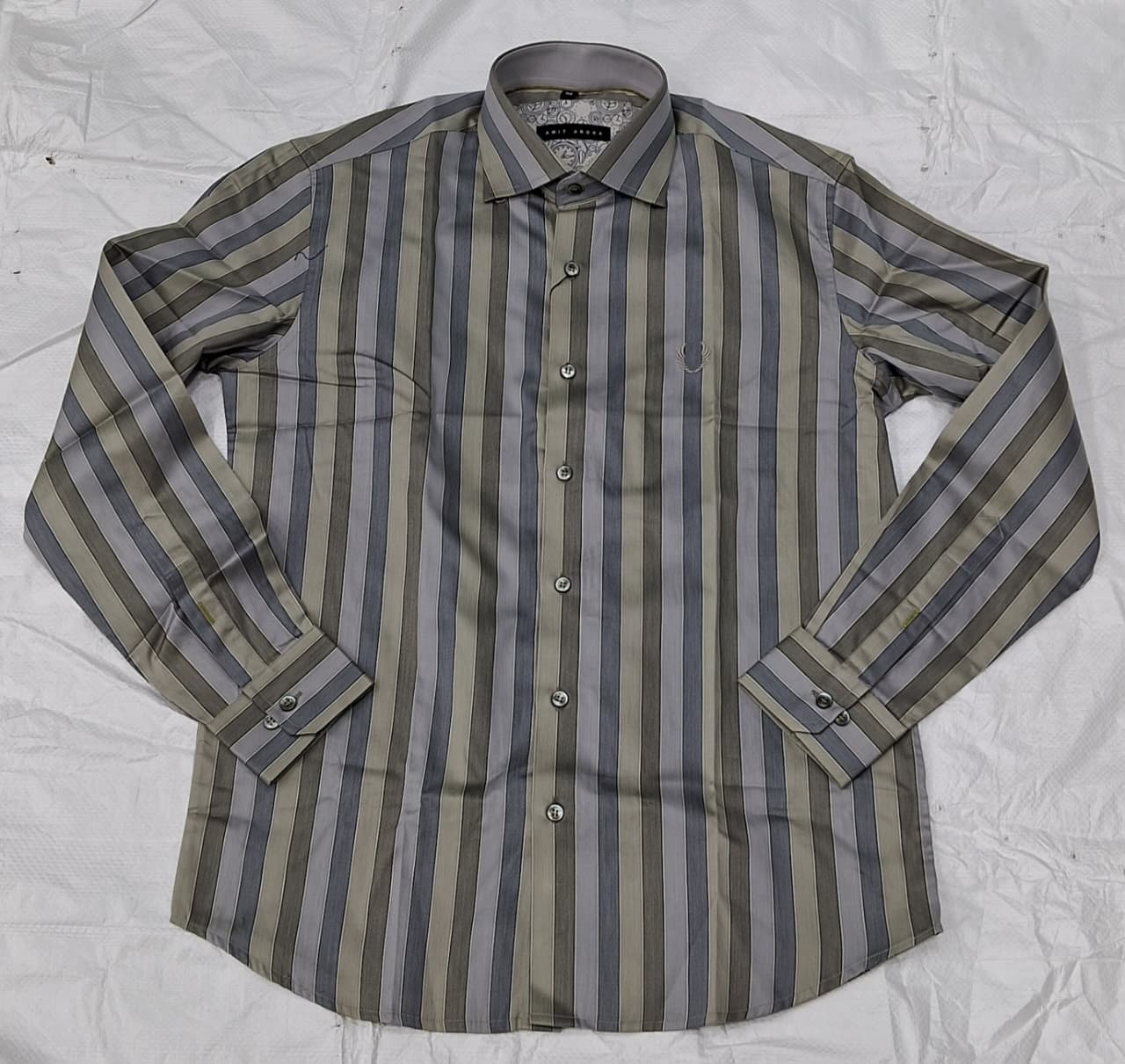
Sage, grey and cream multi-striped shirt laid flat
Sage multi-stripe
i.

Everyday office dressing

A versatile office wardrobe rests on a rotation, not a single outfit. Five to eight shirts, two to four pairs of trousers and one or two jackets cover most weeks. Choose shirts that pair with all your trousers, so that any combination works on a hurried morning.

Start with light blue and white, then add fine stripes and small checks. A soft multi-stripe like this one brings variety while staying neutral enough for navy, grey or beige trousers.

Shirt
Fine stripe or light solid, tucked
Trousers
Navy or mid-grey, flat-front
Shoes
Brown derbies or loafers
Tie
Optional
Grey and white striped shirt laid flat
Grey stripe
ii.

Business meetings

In meetings, aim for composure. A shirt that fits cleanly through the shoulders and chest, a collar that sits properly under a jacket, and colours that do not distract all help others focus on what you say.

Grey or blue stripes under a charcoal or navy suit look assured. Choose a semi-spread collar that holds its shape with or without a tie, and make sure a centimetre of cuff shows at the sleeve.

Shirt
White, blue or fine stripe
Suit
Charcoal or navy
Shoes
Black or dark brown oxfords
Tie
Solid or small pattern
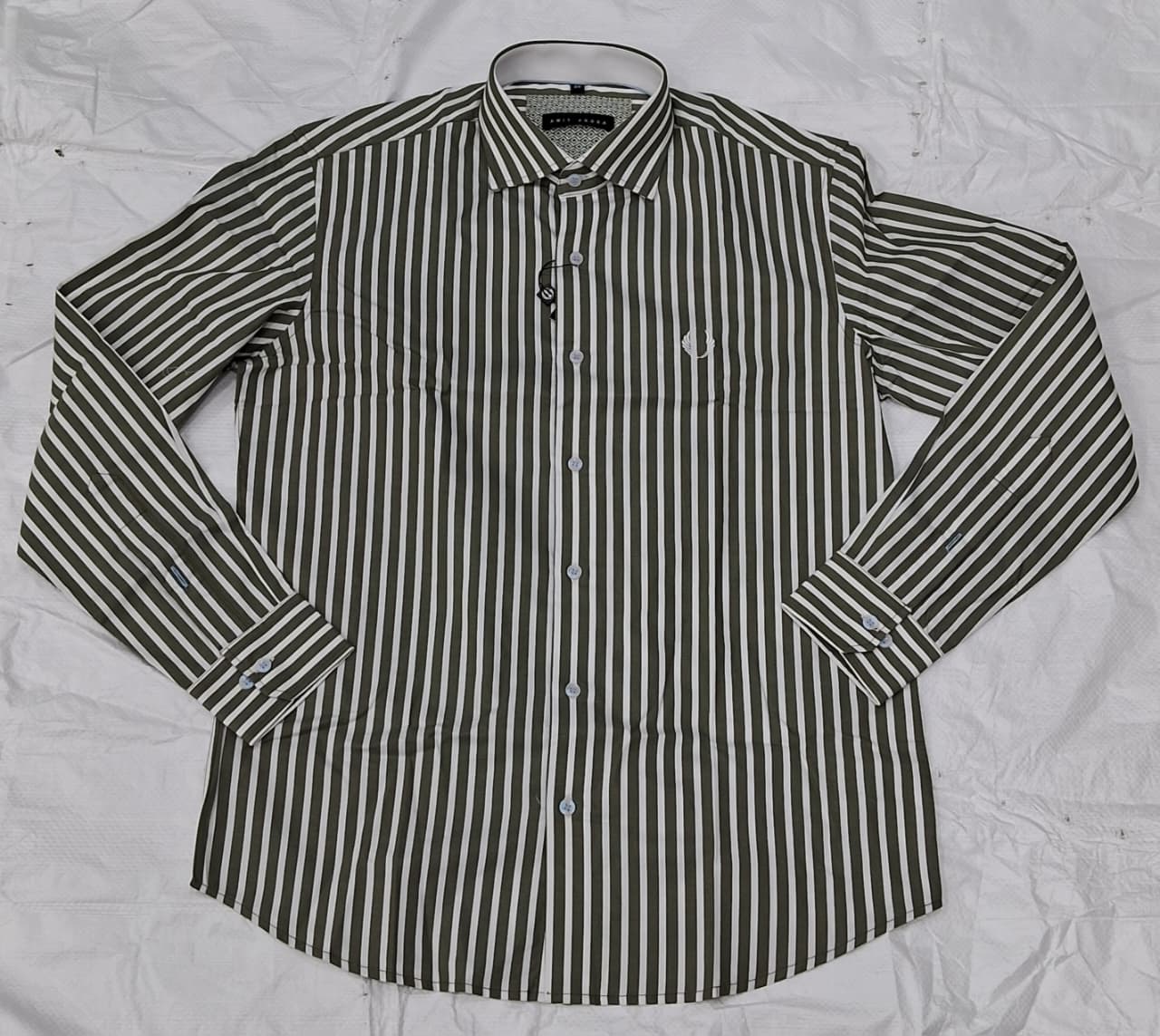
Green and white striped shirt laid flat
Green stripe
iii.

Corporate presentations

On stage or on screen, structure matters. Choose a crisp, well-pressed shirt with a firm collar. Very fine patterns such as tight stripes or tiny checks can flicker on camera (an effect called moiré), so solids or bolder, well-spaced stripes are safer for video.

A white or pale blue shirt under a dark suit is the most structured combination. Where the setting allows a little character, a clearly defined stripe like this green one reads well at a distance.

Shirt
Solid or clearly spaced stripe
Jacket
Dark, structured
Collar
Spread or semi-spread, with stays
Check
Pressed, cuffs visible
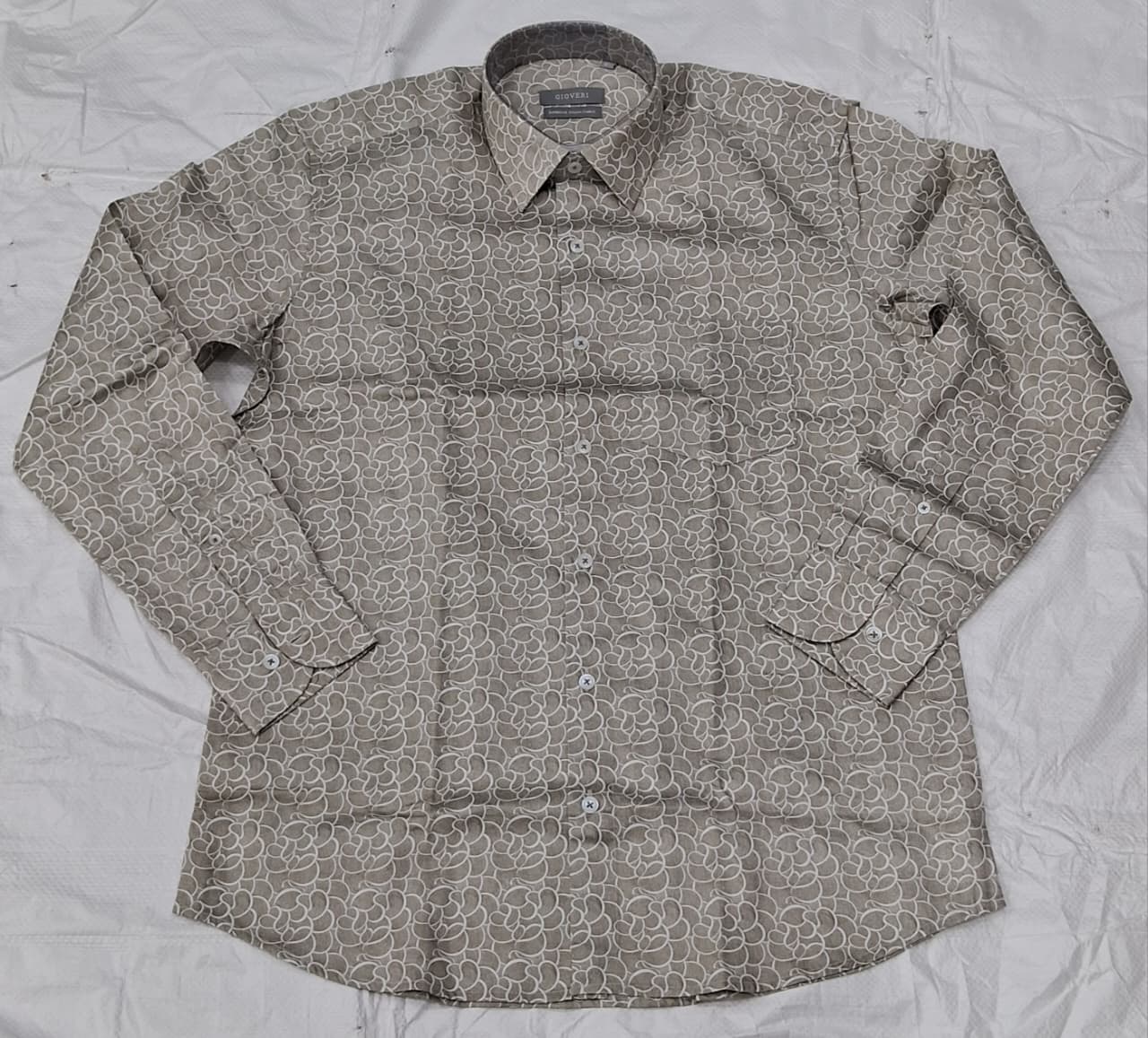
Stone-coloured shirt with a tiny paisley-like micro print
Stone micro print
iv.

Smart professional dressing

Many offices now sit between formal and casual. Here the shirt can carry a little more texture or a quiet print, worn without a tie, with tailored trousers or chinos and perhaps an unstructured jacket.

The balance comes from keeping one element formal. If the shirt is relaxed, keep trousers sharp and shoes polished; if the trousers are casual, choose a crisp shirt.

Shirt
Micro print, oxford or soft solid
Trousers
Tailored chinos in stone or navy
Jacket
Unstructured, optional
Shoes
Loafers or suede derbies

Coordination

Shirt & trouser coordination

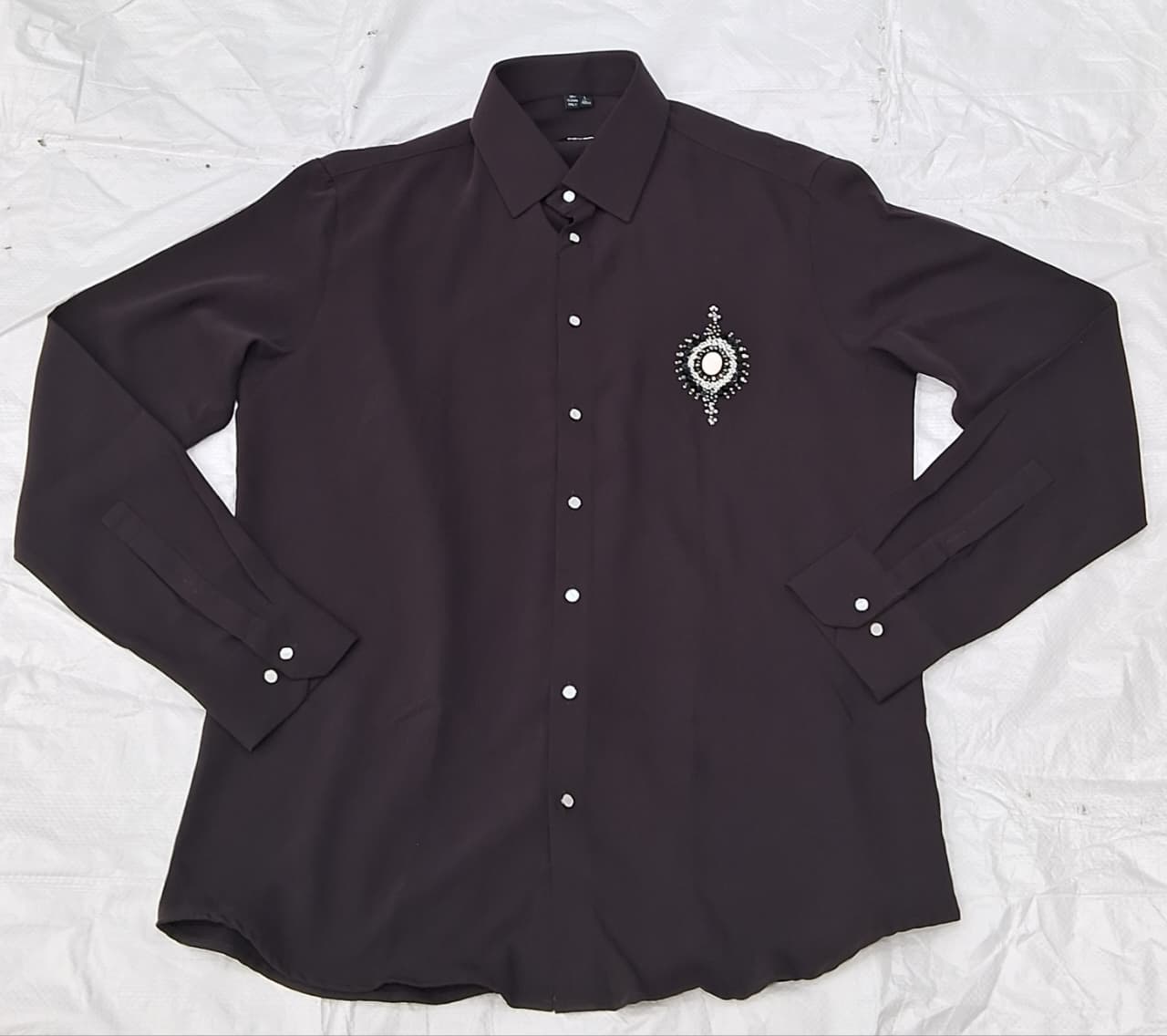
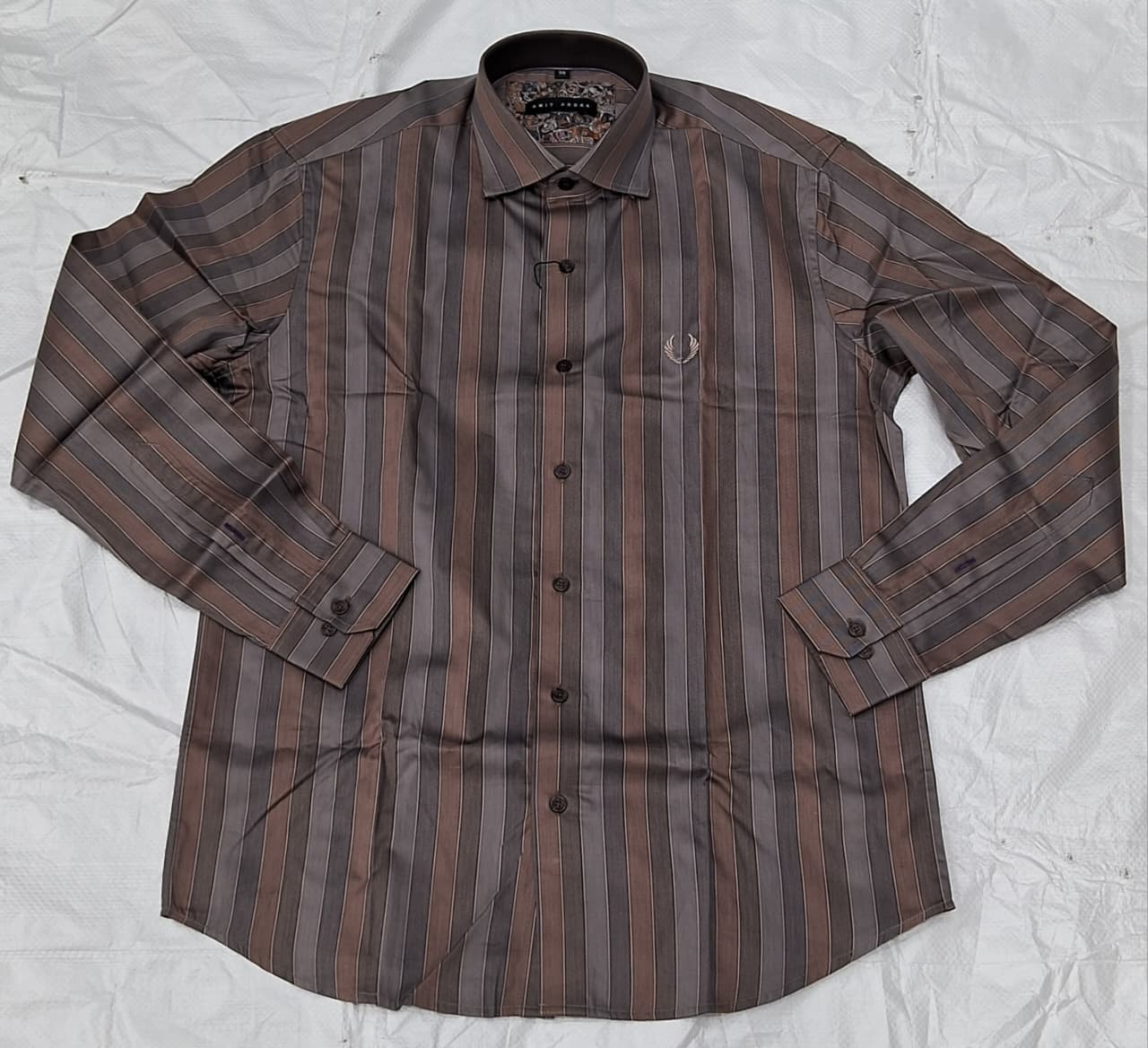
Aubergine solid shirt with a small embroidered motif
Brown shirt with tonal stripes

Contrast

The simplest rule is contrast: a light shirt with darker trousers. It looks deliberate, defines the waist and flatters most builds. Low-contrast combinations — a pale blue shirt with light grey trousers — look softer and more relaxed; they work best when the fit is excellent.

Colour harmony

Cool colours (blues, greys, lilac) pair naturally with navy, charcoal and black. Warm colours (pink, beige, brown, olive) pair with beige, brown, olive and navy. Navy is the bridge that goes with almost everything.

Proportion

The shirt and trousers should meet cleanly at the waist. A tucked shirt with a mid-rise trouser gives the longest leg line; a belt in a contrasting tone breaks the line, while a tonal belt continues it. Slim shirts look best with trousers that taper slightly; fuller shirts with straighter trousers.

TrousersSafest shirtsAdventurous shirts
NavyWhite, light blue, pinkOlive, burgundy, stone
CharcoalWhite, light blueLilac, pale pink, fine stripes
Mid-greyWhite, light blue, navyBurgundy, deep green
BlackWhite, pale greyLilac, charcoal
Beige / stoneWhite, light blue, navyOlive, brown, pink

Try the interactive colour coordination guide →

Layering

Shirt & blazer combinations

The jacket frames the shirt. Collar, colour and pattern all need to work with its lapels and cloth.

Navy blazer

The most adaptable jacket. White, light blue, pink and fine-striped shirts all work. With grey or beige trousers it is the classic smart professional uniform.

Grey jacket

Pairs with white, blue and pastel shirts. Charcoal suits evening wear; lighter greys feel more relaxed. Avoid shirts of a similar grey.

Textured or patterned

Tweeds, checks and textured cloths call for plain or very finely patterned shirts. Light blue and cream complement brown and green tones.

Collars and lapels

Proportion is everything: wide lapels pair best with spread collars, narrow lapels with narrower point or semi-spread collars. Without a tie, a collar with firm structure, or a button-down, stands neatly inside the lapels instead of collapsing beneath them.

Patterns

When combining a patterned shirt and patterned jacket, vary the scale: a fine stripe shirt with a larger check jacket, never two patterns of the same size.

Finishing

Accessories as styling elements

Accessories should support the shirt, not compete with it. Choose a few good pieces and keep them consistent.

Ties

The tip should reach the belt buckle. Width should roughly match the lapel. Choose a tie darker than the shirt.

Belts

Match the leather to your shoes. A slim belt with a simple buckle suits formal trousers.

Watches

A slim dress watch slips beneath the cuff; size the cuff so it covers the watch when the arm is relaxed.

Shoes

Oxfords are most formal, then derbies, then loafers. Black for formal and evening; brown for daytime versatility.

Pocket squares

Pick up a colour from the shirt or tie, rather than matching the tie exactly. A white linen square works with everything.